
How to Choose the Right Formal Socks for Men

Table of Contents

Formal socks might be one of the smallest parts of a man’s wardrobe, but choosing the right pair can make a big difference in style, comfort, and confidence. The perfect socks complete a formal outfit — whether you’re heading to the office, a wedding, a business meeting, or a corporate event.
Discover exactly how to choose the right formal socks for men, what to look for in materials and colours, and how to avoid common styling mistakes. This is everything you need to know — simplified.
Why Choosing the Right Formal Socks Matters
Most men focus on shoes or suits, but socks play an important role too:
They maintain a polished, professional look
They protect feet during long hours in formal shoes
They add comfort and prevent blisters
The wrong socks can make formal wear look sloppy
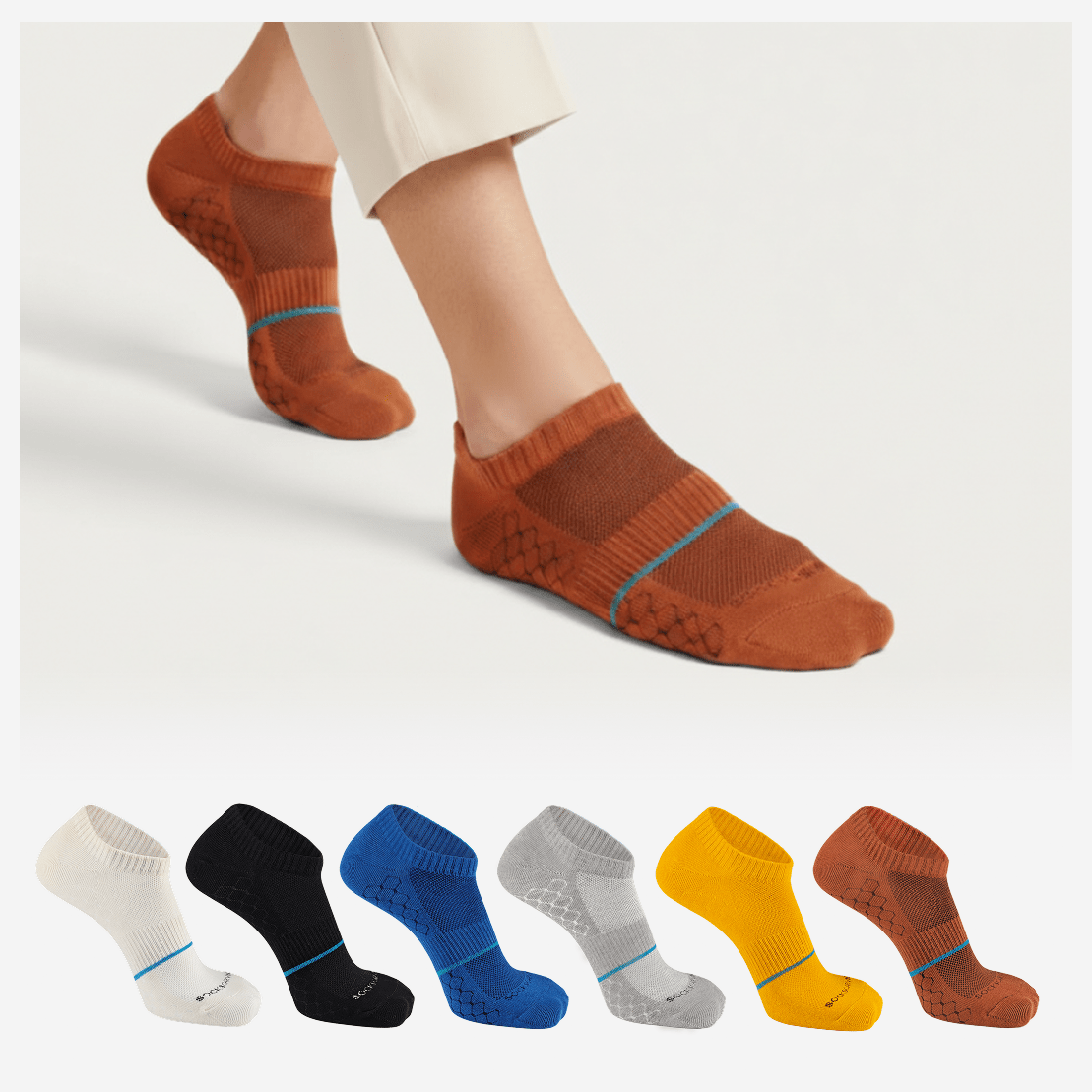
In India, where office culture and formal occasions are common, picking the right socks can elevate your entire outfit.
What Makes a Sock “Formal”?
Formal socks are distinct because they:
-
Have a simple, understated design
-
Use smooth, fine fabrics
-
Reach an appropriate length
-
Complement shoes and trousers
They should never be flashy, bright, or overly casual — no sports logos, loud patterns, or thick knits.
1. Sock Length: What’s Best for Formal Wear?
Crew Socks (Most Recommended)
Crew socks are the best choice for formal dressing. They:
-
Cover the calf
-
Prevent skin from showing when seated
-
Stay in place all day
Ideal with: Oxfords, Derbies, Brogues, Loafers in formal settings.
Mid-Calf / Over-Calf Socks
Also great for very formal occasions or if you sit a lot:
-
No skin exposure when crossing legs
-
Keeps ankles hidden
Avoid Ankle or No-Show Socks
These are sporty or casual — not suitable for formal outfits.
2. Sock Colours That Match Formal Outfits
Colour matching is key in a formal wardrobe.
Black Socks
The most formal and versatile — perfect with:
-
Black shoes
-
Charcoal suits
-
Formal attire
Dark Grey & Navy Socks
Great choices when wearing:
-
Navy suits
-
Grey or charcoal trousers
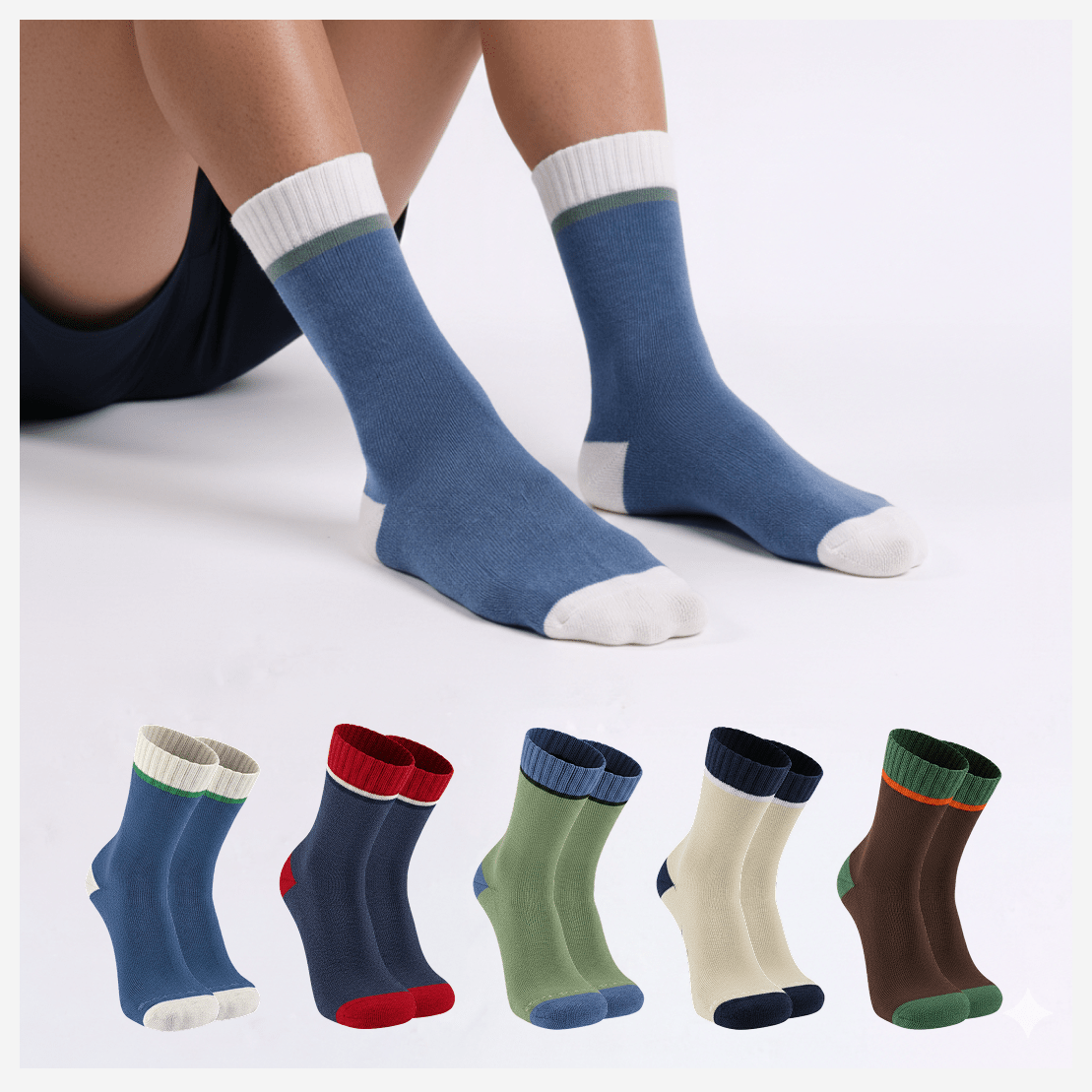
They blend seamlessly without attention.
Match Socks to Trousers, Not Shoes
It’s a good style rule:
Socks should match trousers first, then shoes.
This elongates the leg visually — a subtle but powerful style tip.
3. Material Matters: Comfort Meets Elegance
The best formal socks are not just about looks — comfort is equally essential.
Combed Cotton
-
Soft & breathable
-
Good for Indian weather
-
Works for long office hours
Bamboo Blends
-
Excellent moisture control
-
Soft on skin
-
Anti-odour properties
Great for daily office use — especially in warm climates.
Wool Blends (for Cooler Weather)
-
Adds warmth
-
Slight texture without bulk
-
Works with boots or winter suits
Choose fine merino wool blends to avoid itchiness.
Spandex / Elastane
A small amount adds:
-
Stretch
-
Snug fit
-
Sock retention
This prevents socks from sagging over time.
4. Thickness & Cushioning — Less Is More
Formal socks should be:
-
Thin to medium in thickness
-
Smooth against the skin
-
Not bulky under dress shoes
Heavy cushioning is great for sports socks — but too thick socks with formal shoes will:
Make feet feel tight
Create creases in trousers
Look visually off
A sleek profile always works better.
5. Patterns That Work (And Patterns to Avoid)
Safe & Subtle Patterns
-
Fine ribbing
-
Gentle textures
-
Tonal dots or thin stripes
These add depth without shouting.
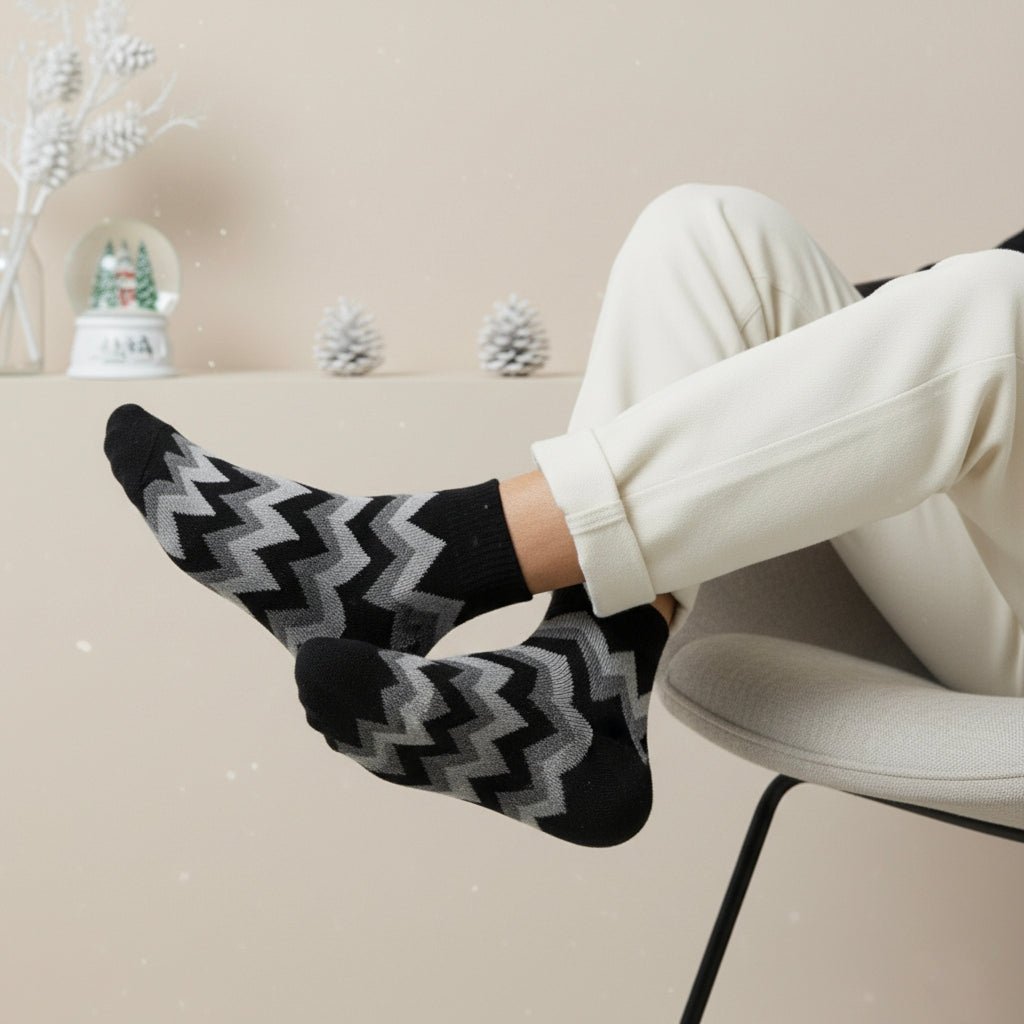
Avoid Loud or Cartoon Patterns
Fire flames, large graphics, bright colours, or logos are casual and should be kept for weekends or streetwear — not with suits.
6. Fit & Elastic: Comfort Without Marks
A good formal sock should:
Stay up without sliding
Have gentle but firm elastic
Not leave marks on the calf
Fit snugly without compression
Poor elastic can cause:
-
Circulation restriction
-
Marks on skin
-
Sagging during the day
Always choose socks with quality elastic and spandex blends.
7. How to Pair Formal Socks by Shoe Style
Here’s an easy cheat sheet:
Black Oxfords / Brogues
-
Black or charcoal socks
-
Crew or mid-calf length
Brown Derby / Loafers
-
Dark grey or navy socks
-
Avoid bright socks
Formal Boots
-
Crew socks
-
Neutral colours to match trousers
8. How Many Formal Socks Should a Man Own?
To stay polished year-round:
-
5–7 pairs for daily office use
-
3–5 pairs for formal occasions
-
2–3 premium pairs for events & meetings
Rotating socks ensures hygiene, freshness, and longevity.
9. How to Care for Your Formal Socks
Proper care keeps your socks soft and long-lasting:
Wash inside out
Use mild detergent
Air dry in shade
Avoid bleach
Don’t tumble dry on high heat
Good care maintains fabric integrity and fit.
10. Common Mistakes When Choosing Formal Socks
Wearing casual socks with dress shoes
Choosing bright, loud patterns
Thick sports socks with suits
Ignoring sock comfort factors
Buying cheap low-quality socks
Formal socks should be a seamless part of your outfit, not an afterthought.
Formal socks might be a subtle part of your wardrobe, but they have a surprisingly big impact on comfort and style.
From material choice to length, colour, and fit — every element matters when you want to look sharp and feel comfortable, whether it’s for:
-
Office days
-
Business meetings
-
Weddings and events
-
Professional environments
Invest in the right formal socks for men — and you’ll notice the difference from the first step.
FAQs – How to Choose the Right Formal Socks for Men
1. What length of socks is best for formal wear?
Crew or mid-calf socks are best for formal wear — they prevent exposed skin when sitting or crossing legs.
2. Should formal socks match shoes or trousers?
Match formal socks to your trousers first, then shoes. This creates a streamlined and professional appearance.
3. Can I wear colourful patterns with formal outfits?
Stick to subtle textures and muted tones. Bright, bold patterns are best saved for casual outfits.
4. Are cotton or wool socks better for formal wear?
Both are good. Cotton blends are great for everyday use, while wool blends work better in cooler weather.
5. How many pairs of formal socks should a man have?
A recommended wardrobe includes at least 7–10 pairs to rotate and maintain freshness.


